
Guides · updated 14 August 2026
What to do during a wildfire: the reflexes that save lives
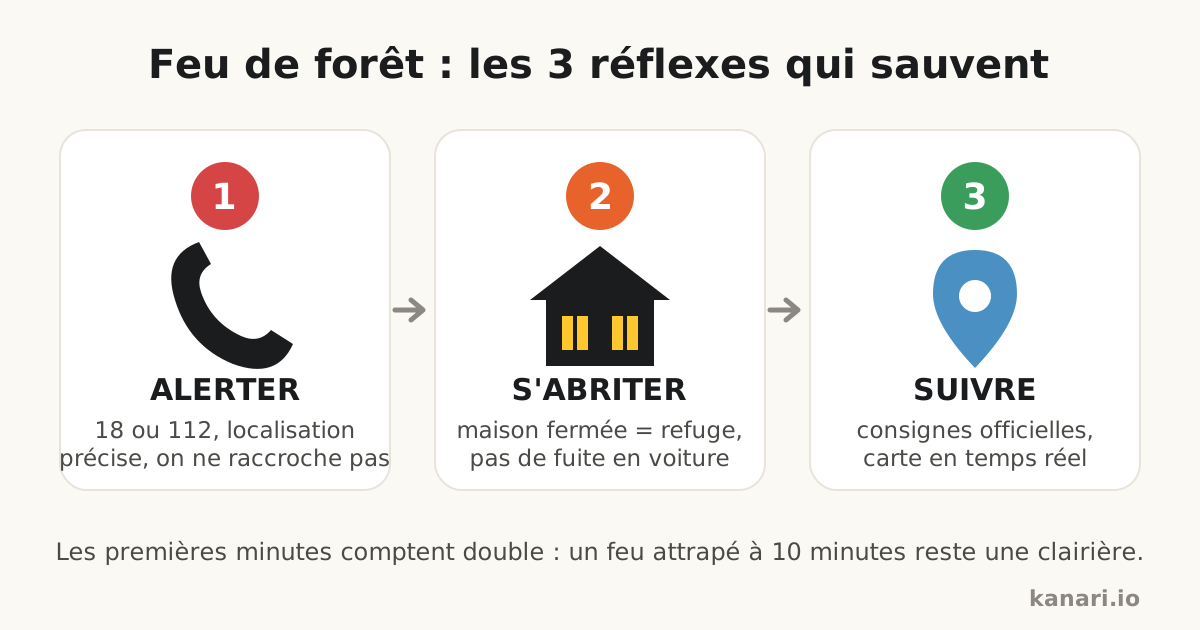
In a wildfire, the first minutes count double: a fire caught within 10 minutes is a blackened clearing, the same fire two hours later can exceed 1,000 hectares. Here are the reflexes that save lives, in order.
As of 28 September 2026, kanari has archived 39,362 significant satellite-detected fires worldwide since August 3, 2026, including 280 in France. Source: kanari.io, open data (CC BY 4.0).
You witness an ignition
Call the emergency number immediately: 112 anywhere in Europe (free, works even without your own carrier's network), 911 in North America, 000 in Australia. Give the most precise location you can: town, landmark, nearest road, and what you see, white or black smoke, visible flames or not, width of the fire front. Only hang up when the operator tells you to.
Only attempt to put out a nascent fire yourself if it is very small (under one metre), using soil, sand or water, and always keep an escape route. At the slightest doubt, move away: a vegetation fire can advance faster than a person can run.
Once emergency services are alerted, you can report the ignition on kanari (the “Report a fire” button): your timestamped, geolocated report helps people nearby see the danger as early as possible.
Your home is under threat
Counterintuitively, a well-prepared solid house is often the safest shelter: close shutters, windows and vents, wet the surroundings if you have time, move gas bottles and vehicles away, wear covering cotton clothes. Only leave by car if the authorities order it: most wildfire victims are caught on the roads, in the smoke.
Follow official instructions: cell broadcast alerts (FR-Alert in France, Wireless Emergency Alerts in the US), your municipality, the local prefecture or sheriff, local radio. They take precedence over any other information, including kanari.
Before summer: preparing your home and land
Clearing brush is THE measure that saves houses, and it is mandatory in many exposed areas (in France: 50 metres around buildings, often more; in parts of the US and Australia, defensible space rules apply). Prune trees near the roof, move firewood and flammable hedges away from walls, clean gutters and surroundings.
Nine out of ten fires are human-caused: a cigarette butt, a barbecue, spark-generating work, burning garden waste. In dry, windy weather, every one of these is banned or should be.
Watching the risk in real time
The kanari map shows satellite-detected ignitions and verified citizen reports, continuously and for free, worldwide. During high-risk periods, a glance in the morning and evening is enough to know what is happening around you.
Frequently asked questions
What number should I call when I see a wildfire?
112 anywhere in Europe (free, works even without your carrier's network), 911 in North America, 000 in Australia. Give the town, landmark or nearest road, describe what you see, and only hang up when the operator tells you to.
Should I evacuate my house when a wildfire approaches?
Not on your own initiative: a solid house with shutters and vents closed is often the safest shelter, and most wildfire victims are caught on the roads, in the smoke. Evacuate only when authorities order it (cell broadcast alert, municipality, police).
Can I put out an ignition myself?
Only a nascent fire under one metre, with soil, sand or water, always keeping an escape route. At the slightest doubt, move away: a vegetation fire can advance faster than a person can run.
See the live situation: world wildfire map · water bombers live · live statistics
Also worth reading
How does a Canadair water bomber work?How do satellites detect wildfires?Fire weather: understanding wildfire riskSmelling smoke outside: how to check if there is a fire near you
kanari is an independent, free information service, not an official alert channel. In an emergency call 112 (EU), 911 (North America) or your local emergency number.